

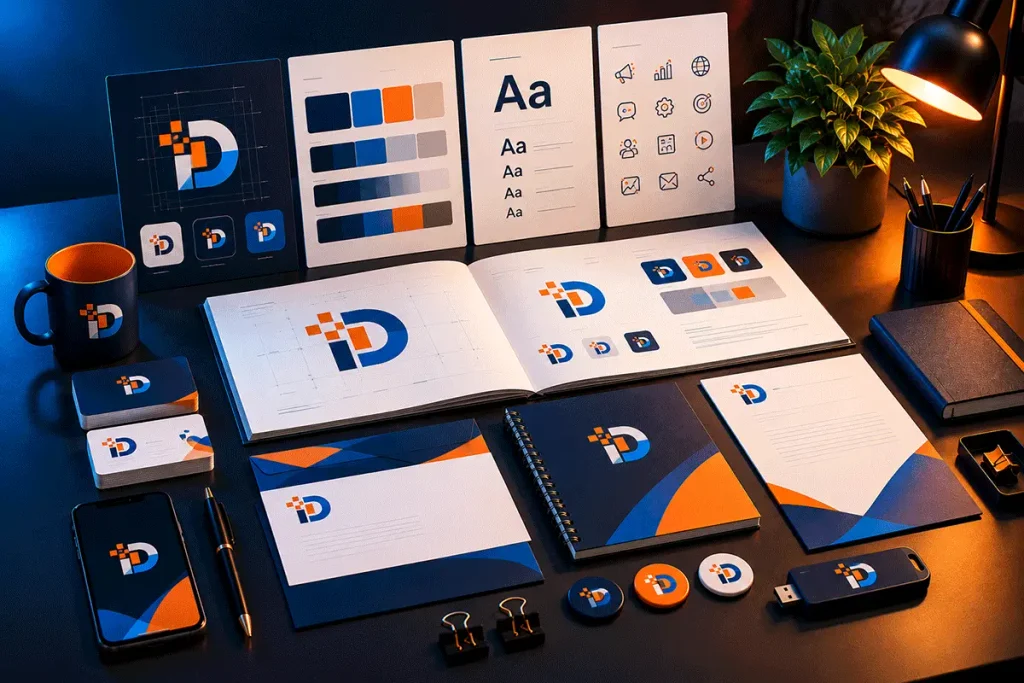
Imagine discovering a business on Instagram. Its posts look modern and professional, with attractive colours, clear typography and a recognisable logo. Interested in its services, you visit the company’s website. However, the website looks completely different. The logo has changed, the colours are inconsistent, and the writing style feels unrelated to the Instagram posts. You might begin wondering whether both platforms belong to the same business.
This simple example highlights why consistent branding matters for small businesses.
Branding is more than designing an attractive logo. It involves creating a recognisable identity that customers experience across different platforms and interactions. Whether you operate a local retail store, travel agency, healthcare centre, digital agency or online business, maintaining a consistent brand identity can help customers recognise your business and understand what it represents.
In this guide, we’ll explore what consistent branding means, why it matters, the common mistakes businesses make and practical steps you can take to build a more professional brand identity.
1. What Is Branding?
Branding is the process of establishing and communicating a business’s identity. It includes the visual, verbal and experiential elements that help people recognise and understand your organisation.
A brand may include:
- Business name
- Logo and visual identity
- Brand colours
- Typography
- Brand messaging
- Communication style
- Website design
- Social media presentation
- Marketing materials
- Customer experience
These elements work together to create an impression of your business.
For example, a business might use a modern visual identity, straightforward language and educational content to communicate professionalism and accessibility.
Another business might use traditional typography, elegant photography and formal messaging to communicate heritage and exclusivity. Neither approach is universally correct. The important consideration is whether your brand identity accurately represents your business and communicates effectively with your intended audience.
2. What Is Brand Consistency?
Brand consistency means presenting your business identity in a recognisable and coordinated manner across different communication channels. Your website, social media pages, advertisements, business cards and other marketing materials should feel like they belong to the same organisation. This doesn’t mean every design must look identical. Different platforms require different layouts, image dimensions and communication approaches. However, important brand elements should remain recognisable.
For example, your business might consistently use:
- The same official logo
- A defined colour palette
- Selected typography
- A recognisable photography style
- Consistent brand messaging
- A similar communication tone
When these elements are used together, customers can more easily connect your different marketing activities with your business.
3. Why Consistent Branding Matters for Small Businesses
Small businesses often compete with organisations that have larger marketing budgets and established customer relationships. A consistent brand identity can help smaller businesses present themselves professionally without requiring a large advertising budget.
Here are some important reasons to prioritise brand consistency.
It Helps Customers Recognise Your Business
Customers may discover your business through several channels. They might see a Facebook advertisement, visit your Instagram profile, search for your website and later encounter your business on Google. If each interaction presents a completely different visual identity, recognising your business becomes more difficult.
Consistent use of your logo, colours and design elements helps connect these experiences. Over time, repeated exposure to recognisable brand elements can contribute to brand familiarity.
It Supports a Professional Appearance
A business with coordinated marketing materials can communicate that it pays attention to presentation.
For example, imagine a local consulting company with a professionally designed website, matching social media profiles and consistent presentation documents.
Its marketing materials communicate a coordinated identity. Although attractive branding alone cannot establish service quality, it can help create a professional first impression.
It Reduces Customer Confusion
Inconsistent branding may cause customers to question whether different accounts or websites belong to the same business. This is particularly relevant when customers move between websites, social media profiles and online advertisements. Using consistent business names, logos and contact information can make your digital presence easier to understand.
It Makes Marketing More Efficient
Without established branding guidelines, every new advertisement or social media post may require fresh decisions about colours, fonts, layouts and visual presentation. A defined brand identity reduces repetitive design decisions. Your team or designer can use established templates and guidelines to produce new materials more efficiently.
It Supports Long-Term Brand Development
Branding is an ongoing process. A consistent identity gives businesses a foundation they can maintain as they introduce new services, launch campaigns or expand to additional marketing channels. Rather than redesigning everything for each new campaign, businesses can adapt established brand elements to new requirements.

4. The Difference Between a Logo and a Brand Identity
One common misconception is that creating a logo completes the branding process. A logo is an important visual identifier, but it represents only one part of a broader brand identity.
A logo is a symbol, wordmark or combination of visual elements used to identify a business.
A brand identity includes the complete system of visual and communication elements that represent the organisation.
Consider a restaurant. Its logo may appear on the entrance, menu, website and packaging. However, its branding also includes menu design, photography, colour choices, signage, website presentation and communication style.
All these elements contribute to how customers experience the business. Small businesses should therefore think beyond logo design when developing their brand.
5. Essential Elements of a Consistent Brand Identity
Building a consistent brand begins with identifying the elements that represent your business. Let’s examine the most important ones.
Business Name and Logo
Your business name and logo are fundamental identifiers. Use your official business name consistently wherever practical. Your logo should also have clearly defined versions for different applications.
For example, you may need:
- A primary logo
- A horizontal logo
- A simplified logo
- A version for dark backgrounds
- A version for light backgrounds
These variations should belong to the same visual identity. Avoid changing your logo’s colours, proportions or typography randomly.
Brand Colour Palette
Colours are important visual elements that help establish a recognisable brand identity. Choose a primary colour palette that suits your business.
A basic palette might include:
- One primary brand colour
- One or two secondary colours
- An accent colour
- Background colours
- Standard text colours
Record the appropriate HEX colour codes so that your website designer, graphic designer and social media team use consistent values. Remember that colour choices should also support readability and accessibility.
Typography
Typography refers to the fonts and text styles used in your communication. Selecting suitable fonts helps create a consistent visual appearance.
A basic typography system may include:
- Heading font
- Body font
- Heading sizes
- Standard font weights
- Line spacing
- Text colours
Avoid using numerous unrelated fonts across different marketing materials. Consistency generally makes your designs easier to recognise and maintain.
Photography and Visual Style
Images are another important part of brand presentation.
Consider whether your business should primarily use:
- Professional photographs
- Product photography
- Lifestyle imagery
- Illustrations
- Minimalist graphics
- Educational diagrams
- Behind-the-scenes photographs
Your image choices should reflect your products, services and audience. You can introduce variety while maintaining a recognisable visual direction.
Brand Voice and Messaging
Branding is not limited to visual design. The language you use also shapes your business identity. A brand voice describes how your organisation communicates.
For example, your communication might be:
- Professional and informative
- Friendly and conversational
- Technical and educational
- Formal and authoritative
- Creative and energetic
Choose an approach that suits your business and customers. Your website, social media captions and advertisements should communicate in a reasonably consistent voice.

6. Why Your Website Should Reflect Your Brand Identity
Your website is an important part of your digital brand presence. Unlike social media platforms, a business website offers substantial control over its layout, content, navigation and presentation. Your website should accurately represent your business and maintain consistency with your other marketing materials.
Important considerations include:
Logo placement: Use the official logo in a prominent, appropriate location.
Brand colours: Apply your defined palette throughout the website.
Typography: Maintain consistent heading and body text styles.
Imagery: Select photographs and graphics that reflect your visual identity.
Messaging: Communicate your services using your established brand voice.
Navigation: Make important information easy to find.
Mobile experience: Ensure the design remains usable across different screen sizes.
A professional website can bring these elements together and provide a central destination for customers who discover your business through other marketing channels.
7. Maintaining Brand Consistency on Social Media
Social media provides opportunities to communicate with customers, but it can also expose inconsistencies in your branding. Different post designs, changing colour schemes and unrelated visual styles can make a business profile appear disorganised. Establish a simple design system for your social media activities.
This might include:
- Profile picture guidelines
- Cover image guidelines
- Post templates
- Reel cover templates
- Standard brand colours
- Typography rules
- Logo placement
- Image selection guidelines
Templates can help maintain consistency while allowing creative flexibility. However, avoid making every post look exactly the same. Your content should remain visually interesting and appropriate to its subject.

8. Consistent Branding in Advertising and Marketing Materials
Your brand identity should extend beyond your website and social media pages.
Other important materials may include:
- Digital advertisements
- Business cards
- Brochures
- Flyers
- Posters
- Banners
- Email signatures
- Presentations
- Product packaging
- Business stationery
For example, a business running Facebook advertisements should use visual elements that customers can recognise when they visit its website. If the advertisement and landing page have completely unrelated appearances, the transition may feel confusing.
Consistent branding helps connect these marketing experiences. It also simplifies campaign production because designers can reuse approved visual elements.
9. How Consistent Branding Can Support Customer Trust
Customers often evaluate a business before making contact. They may visit several online platforms, read reviews, compare services and examine the business’s website. Consistent presentation can help customers recognise that these different channels represent the same organisation. However, branding should support genuine business credibility rather than attempt to manufacture it. A polished design cannot compensate for inaccurate information, misleading advertising or poor customer service.
Businesses should support their brand identity with:
- Accurate business information
- Clear service descriptions
- Transparent communication
- Genuine customer feedback
- Reliable customer support
- Consistent service delivery
Visual branding creates recognition, while business practices shape the experience behind that identity.
10. Brand Consistency Does Not Mean Every Design Must Be Identical
A common concern among business owners is that following branding guidelines might limit creativity. In practice, a well-designed brand identity provides a framework for creativity.
For example, a travel agency can use the same logo, colours and typography across different campaigns while featuring completely different destinations and photographs.
A graphic design agency can maintain its brand identity while creating varied educational posts, promotional graphics and portfolio presentations.
The objective is to create recognisable relationships between different designs, not produce identical materials. Your brand should be flexible enough to support different communication requirements.
11. Common Branding Mistakes Small Businesses Should Avoid
Businesses often develop their branding gradually. However, certain mistakes can make it harder to maintain a professional and recognisable identity.
Using Different Logo Versions Randomly
Using unrelated logos or changing the original logo’s appearance can weaken visual consistency. Establish approved versions and use them appropriately.
Frequently Changing Brand Colours
Regularly introducing unrelated colour schemes can make your marketing materials look disconnected. Use a defined palette while allowing suitable supporting colours when necessary.
Using Too Many Fonts
Combining numerous unrelated fonts may create visual confusion. A simple typography system is generally easier to maintain.
Copying Competitors
Studying competitors can provide useful insights, but directly copying their branding makes it harder to establish your own identity. Develop a visual direction that reflects your actual business.
Ignoring Mobile Presentation
Branding should work across different screen sizes. A design that looks attractive on a desktop may not remain readable on a smartphone.
Inconsistent Business Information
Outdated contact information, different business names or conflicting addresses can confuse customers. Review your business information across important online platforms.
Following Every Design Trend
Design trends can provide inspiration, but constantly changing your brand to follow them can undermine consistency. Choose trends selectively when they complement your established identity.
12. How to Create a Simple Brand Style Guide
A brand style guide is a document that explains how your business identity should be presented. Large organisations may maintain extensive branding manuals. Small businesses can start with a simple guide covering essential elements.
Your guide might contain the following sections:
1. Logo Guidelines
Include approved logo versions, minimum sizes, spacing and examples of incorrect usage.
2. Brand Colours
Record your primary, secondary and accent colours, including their HEX codes.
3. Typography
Identify approved fonts, heading styles and body text guidelines.
4. Photography and Graphics
Explain your preferred image styles and general design direction.
5. Brand Voice
Describe how your business communicates with customers.
6. Practical Examples
Include sample social media posts, advertisements, website elements and business materials.
This document can become a useful reference whenever you work with designers, developers, content writers or marketing professionals.

13. A Practical Branding Checklist for Small Businesses
Use this checklist to review your existing brand identity.
Visual Identity
- Is our official logo clearly defined?
- Do we have approved logo variations?
- Have we selected our brand colours?
- Are our typography choices consistent?
- Do our photographs and graphics follow a recognisable style?
Website
- Does our website use our current logo?
- Are our colours and fonts consistent?
- Does the website accurately describe our business?
- Is the website usable on mobile devices?
- Are our contact details accurate?
Social Media
- Do our profiles use recognisable branding?
- Are our profile pictures and cover images current?
- Do our posts follow basic visual guidelines?
- Is our communication style reasonably consistent?
- Are our business details correct?
Marketing Materials
- Do our advertisements use approved brand elements?
- Are our brochures and business cards consistent?
- Do our marketing materials contain accurate information?
- Can customers easily recognise our business across different channels?
Brand Management
- Do we have a basic brand style guide?
- Can our team access approved logo files?
- Are our design templates organised?
- Do we review branding when introducing new services or marketing channels?
You don’t need to complete every task immediately. Start by addressing the inconsistencies that are most visible to your customers.
14. When Should a Small Business Consider Rebranding?
Brand consistency is important, but that doesn’t mean a business should never update its identity.
Rebranding may become relevant when:
- The business changes its positioning
- Its products or services change significantly
- It enters a substantially different market
- Its existing identity no longer represents the organisation
- Its branding creates recurring confusion
- The business undergoes a merger or major structural change
However, rebranding should have a clear purpose. Changing your logo simply because you have become bored with it may not justify the time and expense involved. Before making major changes, review what already works and consider how the transition will affect existing customers. A carefully planned brand refresh may sometimes be more appropriate than a complete redesign.

15. How Branding Works With Your Digital Marketing Strategy
Branding and digital marketing are closely connected, but they serve different purposes. Branding establishes how your business presents and communicates its identity. Digital marketing uses channels and activities to connect that business with relevant audiences.
For example:
Website Development
Your website should translate your brand identity into a functional digital experience.
Search Engine Optimisation
SEO helps improve the discoverability of relevant website content through organic search.
Social Media Marketing
Social media provides opportunities to communicate your brand through posts, videos and customer interactions.
Graphic Design
Graphic design translates your visual identity into websites, advertisements, brochures and other materials.
Content Writing
Content writing helps communicate your expertise, services and brand messaging.
When these activities follow consistent branding guidelines, your digital presence can become more coordinated and easier to manage.
Final Thoughts
Consistent branding is not about making every advertisement, website page or social media post look identical. It is about creating a recognisable business identity that customers can understand across different platforms.
For small businesses, this begins with a few practical decisions: choosing an appropriate logo, defining brand colours, selecting typography, establishing a communication style and maintaining these elements across important marketing channels.
You don’t need an extensive branding manual to get started. A clear identity, simple guidelines and consistent application can provide a useful foundation as your business develops. Most importantly, your branding should accurately represent the business behind it.
Build a Consistent Brand Identity With DigiDost
Your website, social media profiles and marketing materials should communicate a recognisable business identity. DigiDost helps businesses create and maintain professional visual communication through graphic design, branding, website development, social media creatives and content writing.
Whether you’re developing a new brand identity or improving your existing marketing materials, we can help you establish a more coordinated digital presence.
DigiDost — Digital Growth Made Simple.
Har Business ka Digital Dost.
Explore our Graphic Design and Branding Services to learn more.