


A small business owner decides it is finally time to build a website. They contact three website developers and receive three different quotations. The first developer quotes ₹8,000. The second quotes ₹25,000. The third recommends a website costing ₹65,000. All three promise a professional, mobile-friendly website.
Naturally, the business owner has a question: Why does the same website seem to have three completely different prices?
The answer is that these quotations may not actually describe the same website.
One might include a ready-made template with basic information. Another might cover customised design, content organisation and contact forms. The third might include original design work, performance optimisation, integrations and ongoing technical support.
Understanding these differences is essential before spending money on website development.
In 2026, a small business website in India can cost anywhere from a few thousand rupees to several lakh rupees, depending on its purpose, complexity and the people building it.
The important question is not simply how much a website costs. It is what your business receives for that investment and how much it will cost to maintain over time.
1. How Much Does a Small Business Website Cost in India?
There is no fixed industry-wide price for website development in India. However, the following illustrative ranges provide a useful starting point for understanding different website requirements.
| Website type | Illustrative development cost |
|---|---|
| Single-page business website | ₹5,000–₹15,000 |
| Basic 4–6 page business website | ₹10,000–₹30,000 |
| Professional small business website | ₹25,000–₹75,000 |
| Custom-designed business website | ₹50,000–₹1,50,000+ |
| Small e-commerce website | ₹40,000–₹1,50,000+ |
| Complex website or web application | ₹1,50,000 and above |
[N.B. These are broad planning estimates for India in 2026, not fixed market rates or DigiDost quotations. Actual prices vary by provider, location, project scope and inclusions. Domain registration, hosting, maintenance, paid software and applicable taxes may be charged separately.]
A local consultant who needs five informational pages will usually have different requirements from a retailer managing hundreds of products.
Similarly, a website developed from an existing template will generally require less initial design work than a website created around a unique visual identity and custom functionality.
Before comparing prices, businesses should identify what type of website they actually need.
2. What Are You Really Paying for When Building a Website?
A website quotation is rarely just a charge for writing code. Several activities contribute to the final development cost.
Planning and Website Structure
Before development begins, someone needs to understand the business. This includes identifying its target customers, services, important information, desired visitor actions and future requirements.
A useful website structure answers questions such as:
- What should visitors see first?
- Which services deserve individual pages?
- How will customers contact the business?
- Should the website include a blog?
- Will the business need to update information regularly?
- Is the website expected to support online sales or bookings?
Even a small website benefits from thoughtful planning. Without it, businesses may end up with attractive pages that are difficult to navigate or fail to answer customers’ questions.
Website Design
Design includes much more than choosing colours and placing photographs. It involves typography, spacing, navigation, page layouts, mobile responsiveness and the overall presentation of information. A ready-made template can reduce design time. A customised design generally requires more work.
Neither approach is automatically better. For a small business with straightforward requirements, a well-configured template may be entirely suitable. A business with unusual services, a distinctive brand or specialised functionality may benefit from a more customised approach.
Development and Functionality
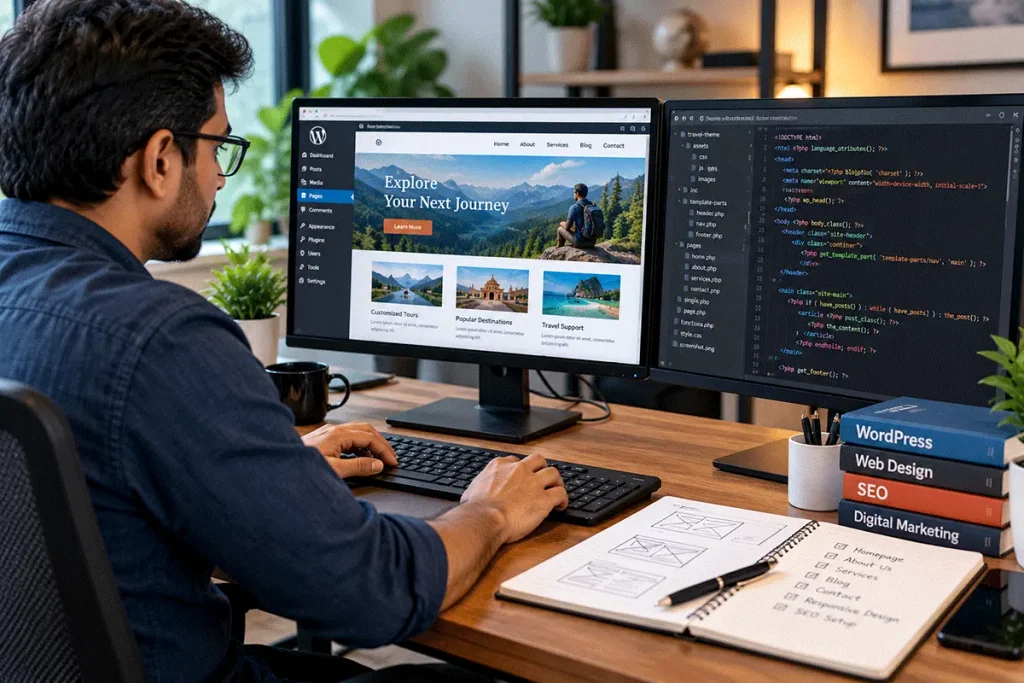
Development turns the planned design into a working website. Depending on the project, this may include contact forms, service pages, content management, search functionality, image galleries, appointment requests or other features.
Each additional feature introduces implementation and testing work. A simple enquiry form is not comparable in complexity to a booking system that manages availability, payments, confirmations and cancellations.
Content Preparation
Website content is another important cost component. Some businesses provide their own text and photographs. Others expect the developer or agency to prepare everything.
Professional content preparation may include service descriptions, homepage messaging, headings, image selection, calls to action and basic search optimisation. A quotation should clearly explain whether content writing is included.
Testing and Launch
A website should be tested before publication. Testing may include mobile layouts, navigation links, forms, browser compatibility, image loading, HTTPS configuration and basic performance checks.
The cheapest quotation is not necessarily the best value if it excludes these activities.
3. Domain Name and Hosting: The Costs Many Businesses Overlook
Website development is usually a one-time project expense. Keeping the website available online involves recurring costs. Two important components are the domain name and web hosting.
Domain Name Cost in India
A domain name is the address visitors use to reach your website. For example, a business might register a .in or .com domain. For budgeting purposes, a small business might allow approximately ₹600–₹1,800 per year for a common domain extension.
Actual prices vary according to the extension, registrar, promotions and renewal terms. Premium domain names can cost substantially more. One detail deserves particular attention: the first-year registration price may be lower than the renewal price. Always check both.
Web Hosting Cost
Web hosting provides the server resources required to make a website accessible online. A basic business website might use shared hosting, while a growing or more demanding website may need managed hosting, cloud hosting or a virtual private server.
Illustrative annual budgets include:
| Hosting type | Approximate annual budget |
|---|---|
| Basic shared hosting | ₹2,000–₹5,000 |
| Managed WordPress hosting | ₹3,000–₹10,000 |
| Cloud or VPS hosting | ₹6,000–₹25,000+ |
These ranges are planning examples rather than guaranteed provider prices. Some hosting plans include a domain for the first year, an SSL certificate, backups or email services. Others charge separately.
Businesses should compare renewal prices, support quality, backup facilities, storage, security features and expected website traffic—not only the advertised monthly price.
Do You Need to Buy an SSL Certificate?
An SSL certificate enables an HTTPS connection between a visitor’s browser and the website. Many hosting providers include free SSL certificates, often through automated certificate services.
For an ordinary small business website, a paid SSL certificate is not automatically necessary. Before accepting an additional SSL charge, ask why a paid certificate is required and whether a suitable free option is already available.

4. WordPress, Website Builders or Custom Development: Which Costs More?
The technology used to build a website can influence both its initial price and its future running costs.
Website Builders
Website builders provide templates, hosting and editing tools within a managed platform. They can be suitable for businesses that want to create a straightforward website without extensive technical knowledge. Their advantages include a relatively simple setup process and predictable subscription plans.
However, businesses should understand the platform’s limitations, subscription renewals, design flexibility and content-export options. Some platforms make it difficult to move a website elsewhere without rebuilding parts of it.
WordPress Websites
WordPress is widely used for business websites, blogs and online stores. The self-hosted WordPress software is free, but businesses still need hosting, a domain and potentially paid themes, plugins or professional development services.
A WordPress website can be economical when it uses an appropriate theme and a limited number of well-maintained plugins. It can also become expensive when the project involves extensive customisation, complex integrations or ongoing support.
WordPress is often a practical choice for businesses that want to publish articles, update pages and manage their content independently.
Custom-Developed Websites
Custom development may involve original HTML, CSS, JavaScript, PHP or another suitable technology. This approach can provide greater control over design and functionality.
However, custom development is not automatically faster, more secure or better for search engines. Those outcomes depend on implementation quality, infrastructure and maintenance. A custom website may also require developer assistance for future changes unless an editing system is included.
The best platform is the one that meets the business’s requirements without introducing unnecessary cost or complexity.
5. A Realistic Budget Example: A Local Service Business
Consider a small diagnostic collection centre, consultancy or home-service provider.
The business wants a website with:
- Homepage
- About Us page
- Services page
- Individual service information
- Contact page
- Enquiry form
- Mobile-friendly design
- Basic search-engine setup
The business does not need online payments, customer accounts or a complicated booking engine.
A hypothetical project budget might look like this:
| Expense | Illustrative cost |
|---|---|
| Website planning and development | ₹18,000 |
| Content organisation and basic page preparation | ₹4,000 |
| Domain registration | ₹900 |
| First-year hosting | ₹3,500 |
| Basic launch testing and configuration | ₹3,000 |
| Estimated first-year total | ₹29,400 |
This is an example, not a quotation or a claim about typical provider billing.
Some developers include content preparation and testing within the development fee. Others itemise these activities separately. For this type of business, spending significantly more may be unnecessary unless the website requires additional features or specialised design.
The objective should be to create a website that clearly explains the business, works properly on mobile devices and makes enquiries easy.
6. Another Example: A Small Online Store
Now consider a local retailer who wants to sell products online. Unlike a basic informational website, an online store may require product pages, shopping-cart functionality, checkout, payment processing, inventory management and order notifications. Additional requirements may include shipping integration, tax configuration, discount codes and customer accounts.
A hypothetical small-store development budget could include:
| Expense | Illustrative cost |
|---|---|
| Store design and development | ₹40,000 |
| Product catalogue setup | ₹8,000 |
| Payment and shipping configuration | ₹7,000 |
| Domain and first-year hosting | ₹7,000 |
| Testing and launch support | ₹5,000 |
| Estimated first-year total | ₹67,000 |
This example assumes a relatively modest catalogue and standard e-commerce functionality.
It excludes payment gateway transaction charges, ongoing product photography, inventory software, marketing expenses and applicable taxes. A store with thousands of products or custom integrations could cost substantially more. This is why comparing an online store quotation with a basic five-page business website quotation is misleading.
They solve different problems.
7. What Makes One Website Quotation More Expensive Than Another?
Two developers can quote different amounts for the same business because they are proposing different levels of work.
Number and Complexity of Pages
Five pages using a shared layout may require less development time than five pages with completely different designs and interactive features. The page count alone does not explain the total cost.
Original Design Requirements
Custom layouts, illustrations, animations and brand-specific visual elements can increase the project scope. Businesses should distinguish between useful design improvements and visual features that add expense without helping customers.
Content Writing and Photography
Original service descriptions, professional photography and carefully organised content require time. A developer who receives finished text and images may quote differently from an agency responsible for preparing them.
Integrations and Special Features
Features such as CRM integration, appointment scheduling, customer dashboards, multilingual content or payment systems may increase both development and maintenance costs. Each feature should have a clear business purpose.
Experience and Support
An experienced developer or agency may charge more because their quotation includes planning, testing, documentation, project management or after-launch support. However, a higher price does not automatically guarantee better work.
Ask for relevant examples, clear deliverables and a written scope.
8. Website Development Cost vs Website Maintenance Cost
One common budgeting mistake is assuming that paying for website development means there will never be another expense. A website needs ongoing attention.
Domain and hosting renewals are obvious recurring costs, but maintenance may also involve software updates, backups, security monitoring, technical troubleshooting and content changes.
A simple static website may require relatively little routine software maintenance, although hosting, security and content still need attention. A WordPress website with several plugins may need more frequent updates and compatibility checks. Businesses that outsource technical maintenance should ask exactly what the service includes.
For example, an annual maintenance arrangement may cover:
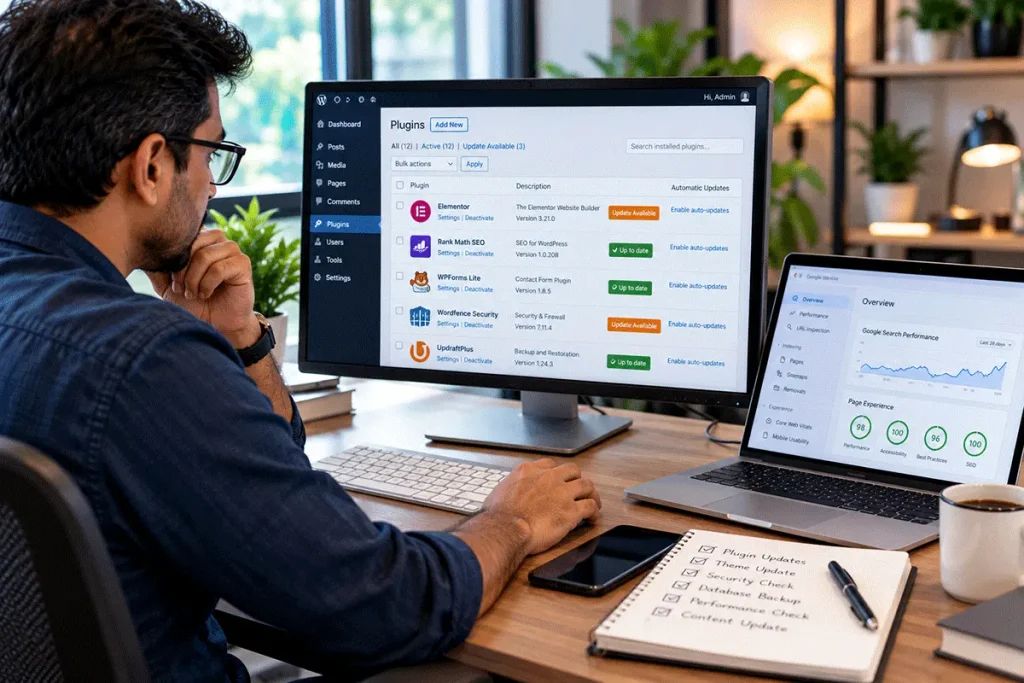
- WordPress and plugin updates
- Scheduled backups
- Basic security monitoring
- Broken functionality checks
- Minor technical fixes
- Limited content updates
Not every provider includes all these activities. A maintenance package costing ₹12,000 per year is not directly comparable with one costing ₹36,000 per year unless the services and response commitments are similar.
For a practical list of ongoing website responsibilities, read DigiDost’s Website Maintenance Checklist for Business Owners.

9. Why You Should Calculate the Three-Year Website Cost
A website’s initial quotation tells only part of the financial story. Consider two hypothetical options for a small business.
Option A: A website costs ₹15,000 to develop, followed by ₹12,000 per year for hosting, software and support.
Option B: A website costs ₹30,000 to develop, followed by ₹6,000 per year for hosting and maintenance.
Assuming the development fee is separate from three full years of recurring charges:
| Expense | Option A | Option B |
|---|---|---|
| Initial development | ₹15,000 | ₹30,000 |
| Three years of recurring costs | ₹36,000 | ₹18,000 |
| Three-year total | ₹51,000 | ₹48,000 |
The apparently cheaper website becomes more expensive over three years. This does not mean Option B is automatically better. The two packages may include different services.
The example simply shows why businesses should compare total ownership costs rather than the initial development price alone.
Before approving a quotation, ask for a clear estimate of the costs expected over the next three years.
10. Hidden Website Costs That Can Surprise Small Business Owners
Some website expenses become visible only after the project begins or the first renewal arrives.
Premium Themes and Plugin Licences
A developer may use commercial software that requires annual renewal. Ask whether these licences belong to your business, what happens when they expire and whether the website will continue functioning without renewal.
Business Email
A professional email address using your domain can strengthen business communication. However, business email hosting may be billed separately from website hosting. Check whether the quotation includes email accounts, storage and ongoing charges.
Additional Revisions
Most development projects include a defined number of revisions. Requests outside the agreed scope may attract additional charges. Agree on the revision process before work begins.
Content Changes
Some developers include minor content updates for a limited period. Others charge separately for every change. If your business frequently updates prices, services or announcements, an easy-to-use content management system may reduce long-term dependence on a developer.
Website Migration
Moving a website between hosting providers or developers may involve technical work. Businesses should understand whether they will receive access to their files, database, domain and hosting account.
Taxes and Third-Party Charges
Confirm whether the quotation includes applicable GST and whether external subscriptions or transaction fees are separate. A clearly itemised quotation makes unexpected expenses less likely.
11. Should You Choose the Cheapest Website Developer?
A limited budget is a genuine consideration for small businesses. There is nothing inherently wrong with choosing an affordable website. A simple website built carefully can serve a business better than an expensive website filled with unnecessary features. The problem arises when a low quotation leaves important requirements unclear.
Before choosing a developer, check whether the proposed website includes:
- Responsive mobile layouts
- Clear navigation
- Working contact forms
- Basic performance optimisation
- HTTPS configuration
- Appropriate image handling
- Search-friendly page structure
- Essential testing
- Agreed revision support
- Ownership and access arrangements
Also ask whether the developer has completed similar projects. A portfolio of functioning websites can be more informative than a long list of technical promises.
The goal is not to buy the cheapest website. It is to purchase a website that meets your business needs at a sustainable cost.
12. Does an Expensive Website Automatically Perform Better on Google?
No. Website development and search engine optimisation are related, but they are not the same service. A well-built website can provide a useful technical foundation for SEO. It may include clean navigation, readable content, mobile-friendly layouts, descriptive page titles and properly structured headings.
However, search visibility also depends on the usefulness and relevance of content, competition, search intent and other factors. Paying ₹75,000 for a website does not guarantee better Google rankings than paying ₹25,000. Likewise, a developer offering a low-cost website should not promise first-page rankings simply because the website includes an SEO plugin.
Businesses should ask what basic SEO setup actually includes.
For example, does it cover page titles, meta descriptions, image alt text, XML sitemap generation and Google Search Console setup?
These are specific deliverables that can be discussed and verified.
For a broader understanding of search visibility, see DigiDost’s SEO Beginner’s Guide for Small Businesses.
13. How Much Should a New Small Business Actually Budget?
A new business does not necessarily need a large website immediately. The appropriate budget depends on its stage, customers and operating model.
A Business Just Getting Started
A local service provider with a limited budget may begin with a small website explaining its services, business identity and contact options. A carefully scoped website in the ₹10,000–₹25,000 development range may be sufficient for some businesses, provided the requirements are straightforward and the quotation is clear.
An Established Local Business
An established business may need detailed service pages, stronger branding, a portfolio, enquiry forms and a regularly updated content section. A development budget of approximately ₹25,000–₹60,000 may offer more room for planning and customisation.
A Growing Business With Special Requirements
A business requiring multiple languages, customer accounts, booking workflows or custom integrations may need a larger budget. In these cases, development costs can exceed ₹75,000 or ₹1,50,000 depending on complexity. These figures are not spending targets.
A business should not increase its budget simply to reach a particular price range. Start by identifying the features customers genuinely need.
14. How to Reduce Website Costs Without Sacrificing Quality
A smaller budget does not have to mean a poorly planned website. There are several ways to control development expenses.
Start With Essential Pages
A business can begin with Home, About, Services and Contact pages, then expand when needed. Avoid paying for dozens of pages before the content or business requirement exists.
Prepare Your Business Information
Providing accurate service descriptions, contact details, business hours and photographs can reduce preparation time. Even if a professional writer later improves the wording, organised source information makes the project easier.
Avoid Unnecessary Features
A complicated booking system may not be necessary if a simple enquiry form meets the business’s current needs. Choose functionality according to actual operations.
Reuse a Suitable Design System
A good template or reusable layout can reduce development time. Custom design should be reserved for situations where it provides meaningful value.
Plan for Future Growth
Avoid building a website that will need to be replaced entirely after a few months. Discuss likely future requirements, such as additional service pages, blog publishing or online payments, during the planning stage.
Keep Ownership Clear
Where practical, register the domain under the business owner’s control and ensure access arrangements for hosting, content and website administration are documented. This can reduce complications if you change service providers later.
15. Questions to Ask Before Accepting a Website Quotation
Before paying an advance, request a written proposal. It should explain what will be delivered, what is excluded and what happens after launch.
Ask the developer or agency:
- How many pages are included?
- Will the design use a template or a customised layout?
- Who will provide the text and images?
- Is mobile responsiveness included?
- Are domain registration and hosting included?
- What are the renewal costs?
- Are premium themes or plugins required?
- What basic SEO work is included?
- How many revisions are allowed?
- Will I receive administrative access?
- Who controls the domain and hosting accounts?
- What happens if I change developers?
- Is maintenance included after launch?
- What is the estimated delivery schedule?
- Does the final price include applicable taxes?
A reliable proposal should answer these questions without unnecessary confusion. If a quotation is unusually low or high, ask for a breakdown rather than assuming the price itself tells you everything.
16. A Website Is an Investment, but It Still Needs a Purpose
It is tempting to judge website development entirely by its price. However, a business website should be evaluated by what it helps visitors accomplish.
Can customers understand your services?
Can they find accurate contact information?
Does the website work properly on their phones?
Can they make an enquiry without unnecessary steps?
Can the business update important information when needed?
These questions are more useful than comparing websites only by the number of pages, animations or visual effects. A website does not automatically create sales or enquiries. It needs relevant content, visibility, a clear visitor journey and ongoing attention.
For businesses still deciding whether they need their own website, DigiDost has also published Why Every Small Business Needs a Professional Website in 2026.
That article explains the role of a business website as part of a broader digital presence.
17. Final Thoughts: What Is a Reasonable Website Budget in 2026?
For many Indian small businesses, a practical website does not need to cost several lakh rupees. A straightforward business website can often be developed within a modest budget, while more customised projects naturally require additional investment.
The right price depends on the website’s purpose, design requirements, content, features and ongoing responsibilities. Before selecting a developer, compare the scope of work, ask about recurring expenses and consider the total cost over several years. Most importantly, choose a website that fits your business today while allowing reasonable room for tomorrow.
At DigiDost, we help businesses plan and develop websites around their actual requirements, rather than assuming every business needs the same design or technology.
You can explore our Website Development Services to understand our approach to business websites, or contact DigiDost to discuss your project requirements.
A good website budget begins with a clear understanding of what your business needs—not with the lowest or highest quotation.
Pricing note: All rupee amounts in this article are illustrative planning estimates for October 2026, not binding quotations. Actual costs depend on project scope, provider, software subscriptions, renewal terms and applicable taxes.